•  

    I was asked the other day what the consequences are of a minor in possession/consumption of alcohol.  Interesting question with the new laws in effect now.  Lets say you were never in a car, you are 18 years old, and you rinsed our mouth out with Listerine.  An officer comes up to you and says I smell alcohol on you, please blow into my little breath test machine.  You do so.  Wow, you just registered a .02 with your good breath. Now what?

    Pursuant to Utah Code 32a-12-209 you have just committed a crime.  The code makes it a crime for a minor (under 21) to have any measurable or detectable amount of alcohol in your body.  The harshest consequence that is now mandatory, even though you were not driving or even near a car, is that you will lose your license for one year.

    Here is the exact language from the statute.

    32A-12-209. Unlawful purchase, possession, consumption by minors — Measurable amounts in body.
    (1) Unless specifically authorized by this title, it is unlawful for a minor to:
    (a) purchase an alcoholic beverage or product;
    (b) attempt to purchase an alcoholic beverage or product;
    (c) solicit another person to purchase an alcoholic beverage or product;
    (d) possess an alcoholic beverage or product;
    (e) consume an alcoholic beverage or product; or
    (f) have measurable blood, breath, or urine alcohol concentration in the minor’s body.

    …(4) If a minor is found by a court to have violated this section and the violation is the minor’s second or subsequent violation of this section, the court:
    (a) shall order the minor to participate in an educational series as defined in Section 41-6a-501; and
    (b) may order the minor to participate in a screening as defined in Section 41-6a-501.
    (5) (a) When a minor who is at least 18 years old, but younger than 21 years old, is found by a court to have violated this section, except as provided in Section 32A-12-223, the court hearing the case shall suspend the minor’s driving privileges under Section 53-3-219.  (the division shall: (A) impose a suspension for a period of one year;)

  •  

    I saw this story in the Salt Lake Tribune the other day.  The man caused an accident that killed another man.  It was an "accident."  A so called "expert cop trained to spot impaired drivers" accused this man of being under the influence of a central nervous system depressant.  The man was jailed for 3 months on felony charges, automobile homicide.  The problem is that the blood was tested several times with nothing found in his system.  I can’t imagine all that he has lost in three months.  Contrary to witnesses’ opinion, the "expert" officer formed the opinion that this man was impaired because he talked slow and was stumbling around.  He had just been in a horrible accident.

    (more…)

  •  This women is being charged with multiple first degree felony rape charges.  Today was her preliminary hearing.  My partner, Rich Gallegos, is defending her.  He asked me to sit with him at the defense table for support and for a second pair of eyes.  He was masterful.  The headlines for months read "Teacher had sex with her student."  Rich showed how things are not so black and white.  He was able to show how this kid was very adult in his conduct and groomed not one, but two older women into inappropriate relationships.  Rich showed how this kid instigated the relationship and pursued this women.  The whole case was turned around once Rich was able to cross examine the witnesses.  Even the judge seemed hesitant to bind the women over for trial.


  • My client goes to a man’s residence to look at a car that the man has for sale.  Client briefly looks at the car and prepares to leave.  He gets in his own car.  He starts the car.  Two cops in an unmarked police car rush up with red and blue lights on.  Cops take the client out of the car with guns drawn in what is called a felony stop.   "I was just looking at a car for sale", client says.  Cops make the determination that client is DUI.  Cops take the client to the police station and give him a breath test.  The result is .04.  Oops cops screwed up.  Cops find another law to charge client with, "not a drop of alcohol DUI" (alcohol restricted driver). 
    We get the police report and it says "Mr. Client came out of a residence of a parolee, and this is a pattern of drug activity."  That was it.  WHAT?!!!

    You go look at a car that is for sale and don’t know anything about the man who is selling it.  You are next being arrested because in the cop’s opinion, this was a pattern of drug activity.  You have to be kidding me.

    Needless to say, we filed a motion to suppress in the Salt Lake City Justice Court.  Cops do not show up for the evidence hearing.  I figure that the cops do not want to answer questions about why they did what they did.  The judge dismisses the case.  The prosecution refiles the case.  We file the same motions and are ready for battle.  Today, we go into Court for the evidence hearing.  Prosecution dismisses the case and no police are there to be questioned.

    This was a case about being arrested for whom you associate with.  Looking at a car in these officer’s mind is a pattern of drug activity.  My poor guy to deal with all the stress of the government accusing him.  Finally, he has relief.  But still, he had to hire a lawyer, take time off for court, show up to hearings and face the reality that even innocent people can be convicted.

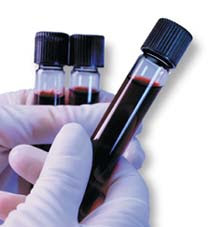
  • The Utah State Crime Lab analyzes all the DUI cases that involve blood draws.  Recently, in the Salt Lake Tribune, there was an article stating that budget cuts may cause cutting lab staff.  If that happens, the lab people in the article say that this could cause turnaround time on blood sample results to slow way down.  Here is the problem.  A person is entitled to a Driver’s license hearing within 29 days of arrest.  If the blood result is not provided within 29 days to the driver’s license hearing officer, there is very little evidence to suspend a person’s driver’s license.  This would benefit the driver, and has done so in the past on cases where the blood results were not ready in time for the hearing.  

    The article states:

    "That seems to be true throughout the state lab, where 15 to 20 scientists analyze about 15,000 items a year in thousands of cases. Now staff are poised to see how a 15 percent budget cut, which took effect July 1, could lengthen turnaround time. The lab, the main section of which is housed in Salt Lake City with extensions in Ogden and Cedar City, had to close its Price branch and cut three positions statewide.
    Lab Director Jay Henry says he’s hoping to get federal funds that would help patch holes at the lab, one of only two state-run labs nationwide accredited under international standards that require regular audits and a dedicated quality assurance manager."

  •  The new laws now allow seizure and forfeiture of your car.  If you have been convicted of certain crimes, the government can take ownership of your car away.  If you are driving on a suspended license, and your license was suspended because of a DUI or DUI Metabolite, then the government can take your vehicle away and never give it back.  The following outlines the new law.

    Forfeiture of Car
    41-6a-527
     

    (4) A motor vehicle is subject to criminal or civil forfeiture under the procedures and substantive protections established in Title 24, Chapter 1, Utah Uniform Forfeiture Procedures Act, upon a finding by the court that:

    (a) the motor vehicle was used in a violation of Section 41-6a-502, 41-6a-517, a local ordinance which complies with the requirements of Subsection 41-6a-510(1), Subsection 58-37-8(2)(g), or Section 76-5-207;

    (b) the operator of the vehicle has previously been convicted of a violation committed after May 12, 2009, of:
    (i) a felony driving under the influence violation under Section 41-6a-502;
    (ii) a felony violation of Subsection 58-37-8(2)(g); or
    (iii) automobile homicide under Section 76-5-207;
    (c) the operator of the vehicle was driving on a denied, suspended, revoked, or disqualified license; and
    (d) (i) the denial, suspension, revocation, or disqualification under Subsection (4)(c) was imposed because of a violation of:
          (A) Section 41-6a-502;
          (B) Section 41-6a-517;
          (C) a local ordinance which complies with the requirements of Subsection 41-6a-510(1);
          (D) Section 41-6a-520;
          (E) Subsection 58-37-8(2)(g);
          (F) Section 76-5-207; or
          (G) a criminal prohibition that the person was charged with violating as a result of a plea bargain after having been originally charged with violating one or more of the sections or ordinances described in Subsections (4)(d)(i)(A) through (F); or
    (ii) (A) the denial, suspension, revocation, or disqualification described in Subsection (4)(c) is an extension imposed under Subsection 53-3-220(2) of a denial, suspension, revocation, or disqualification; and
    (B) the original denial, suspension, revocation, or disqualification was imposed because of a violation described in Subsection (4)(d)(i)(A) through (G).

  • The most common question I get asked is "Can I get a permit to drive to and from work while my license is suspended?"  My answer used to be unequivocally no!  My answer has not changed.  This year, a new law was put in the code to allow a permit for school or work.  However, to qualify for the permit, it is pretty much impossible.  This is what the code says:

    Limited Driving Permit
    53-3-220(4)

    1.  if first suspension extended for 3 years or more
    2. Doctor says no knowledge of drug use unless prescribed in last 3 years
    3. no physical or mental problems
    4. 1 year prior,
    • No violations 
    • No Arrests
    • No accidents
    • Show undue hardship
    • Granted only once
    • School or employment
    • Doesn’t apply to CDL

    (4) (a) The division may extend to a person the limited privilege of driving a motor vehicle to and from the person’s place of employment or within other specified limits on recommendation of the judge in any case where a person is convicted of any of the offenses referred to in Subsections (1) and (2) except:
    (i) automobile homicide under Subsection (1)(a)(i);
    (ii) those offenses referred to in Subsections (1)(a)(ii), (a)(iii), (a)(xi), (a)(xii), (a)(xiii), (1)(b), and (1)(c); and
    (iii) those offenses referred to in Subsection (2) when the original denial, suspension, revocation, or disqualification was imposed because of a violation of Section 41-6a-502, 41-6a-517, a local ordinance which complies with the requirements of Subsection 41-6a-510(1), Section 41-6a-520, or Section 76-5-207, or a criminal prohibition that the person was charged with violating as a result of a plea bargain after having been originally charged with violating one or more of these sections or ordinances, unless:

    (A) the person has had the period of the first denial, suspension, revocation, or disqualification extended for a period of at least three years;
    (B) the division receives written verification from the person’s primary care physician that:
    (I) to the physician’s knowledge the person has not used any narcotic drug or other controlled substance except as prescribed by a licensed medical practitioner within the last three years; and (II) the physician is not aware of any physical, emotional, or mental impairment that would affect the person’s ability to operate a motor vehicle safely; and
    (C) for a period of one year prior to the date of the request for a limited driving privilege:

    (I) the person has not been convicted of a violation of any motor vehicle law in which the person was involved as the operator of the vehicle;
    (II) the division has not received a report of an arrest for a violation of any motor vehicle law in which the person was involved as the operator of the vehicle; and
    (III) the division has not received a report of an accident in which the person was involved as an operator of a vehicle.
    (b) (i) Except as provided in Subsection (4)(b)(ii), the discretionary privilege authorized in this Subsection (4):
    (A) is limited to when undue hardship would result from a failure to grant the privilege; and
    (B) may be granted only once to any person during any single period of denial, suspension, revocation, or disqualification, or extension of that denial, suspension, revocation, or disqualification.
    (ii) The discretionary privilege authorized in Subsection (4)(a)(iii):
    (A) is limited to when the limited privilege is necessary for the person to commute to school or work; and
    (B) may be granted only once to any person during any single period of denial, suspension, revocation, or disqualification, or extension of that denial, suspension, revocation, or disqualification.
    (c) A limited CDL may not be granted to a person disqualified under Part 4, Uniform Commercial Driver License Act, or whose license has been revoked, suspended, cancelled, or denied under this chapter.  

  •  

    If a person gets arrested for DUI after July 1, 2009, then the driver’s license suspension period has been extended.  Basically, a first time offender that does not refuse to take a breath test gets a 120 day suspension.  (Used to be 90 days).  A person with a prior DUI is now Two Years.  A second offense that is a refusal is now Three Years.  The problem is people don’t stop driving.  The effect of these consequences is to put unlicensed and uninsured drivers on the road.  The following is an outline of the new laws that went into effect July 2009.

    New Driver’s License Suspensions

    Refusal
    41-6a-521 Revocation Hearing for Refusal

    18 months first refusal (no change

    36 Months (3 years) for priors (does not matter if priors were refusals) looks back 10 years from date of arrest or conviction

    Refusal Suspension for–Under 21

    18 months or until 21, whichever is longer
    36 months or until 21, whichever is longer if:
    prior license sanction in 10 years for (metabolite, refusal, alc restricted driver, DUI, motorboat alc violation, conditional license violation)

    Non Refusal Suspensions-over 21
    120 days (4 months) extended 30 days
    2 years if there is a prior within 10 years

    Non Refusal Suspension–under 21
    Until 21 or 120 days, whichever is longer
    Until 21 or 2 years, whichever is longer if prior within 10 years
    Deny application for learner’s permit until 21 or 120 days whichever is longer
    or until 21 or two years if priors within 10 years


  • "What makes you different from other lawyers?  Why should I hire you?"  These are some of the most common questions I get from a citizen that has just been accused of a DUI.  The simple answer… it is the difference between hiring a general practitioner doctor and a heart surgeon to do the surgery on a person’s heart.  The heart surgeon cannot guarantee that he will succeed, but a patient will certainly increase the chances of having the best care and knowledge available for the surgery.

    Justin McShane, one of the top rated attorneys in the nation wrote about this exact subject.  I have known Justin for a couple of years now.  He is a specialist in the practice of DUI Defense in Pennsylvania.  He writes:

    "If you have a minor issue, go see a general practitioner. If you have a serious legal issue like a DUI you need to see a specialist. We have discussed at length the various consequences stemming from a DUI conviction. Not only could you be facing, jail time and suspension of your driving license if convicted, you could also lose your job, your occupational license, insurance, and face other stiff financial liabilities. For most of the clients we represent, the DUI charges they were facing, were the most serious legal issue they had or will face in their entire lives. Many of them didn’t realize how serious the consequences were until they sat down with us for a consultation.

    So just as you would got to a heart specialist when facing serious heart problems, you should find a qualified DUI specialist when facing a serious legal issue like a DUI charge. At that point, an attorney who "also deals with DUI" just doesn’t cut it. You need to see a highly trained, qualified lawyer who specializes in DUI and knows about all of the complex legal, procedural, administrative, medical, and scientific issues that are involved in these cases. "

    I agree with Justin completely.  I get questions for divorce, and I refer the questions to a specialist in family law.  If I get a question for estate planning, I refer those questions to an estate planning attorney. The list goes on.  A lawyer with a license to practice law does not mean the lawyer is competent to practice all law.  A lawyer that specializes in a particular area is the lawyer that serves the client with the most care and knowledge.   


  •  

     Effective July 2, 2009, many new laws came into effect.  Now, anyone convicted of a DUI, whether it be a first offense or a subsequent offense, will be required to have an ignition interlock device placed on their car.  The ignition interlock business is going to be making a lot of money on this deal.  Lawyers will need to be fighting DUI cases.  There is no reason to plead people guilty with these consequences.  The device is expensive, it has problems being accurate, and it interferes with life.

    Here is the outline of what is required:

    Ignition Interlock
    41-6A-518.2

    The Adult

    • 18 Months for first time offense
    • 3 years for Second offense (Includes Driving While Impaired or Alcohol Related Reckless)
    • Driving without Ignition interlock (3 year requirement)
    • Refusal (3 years)
    • Felony Conviction (6 years)
    • Automobile Homicide (10 years)
    • Ignition Interlock does not include:Person’s conviction is not a 41-6a-517 (metabolite DUI) ANDall of the person’s prior convictions are convictions under 517
    • Plea and Abeyance: is a conviction

    When can you get out of an ignition interlock???

    • Vehicle owned by employer
    • written notice to employer of interlock requirement
    • On person or vehicle, proof of given notice to employer and
    • operation was in scope of employment
    • Doesn’t apply to personal use or self employed

    If you are a Minor:

    • 3 years if under age 21